
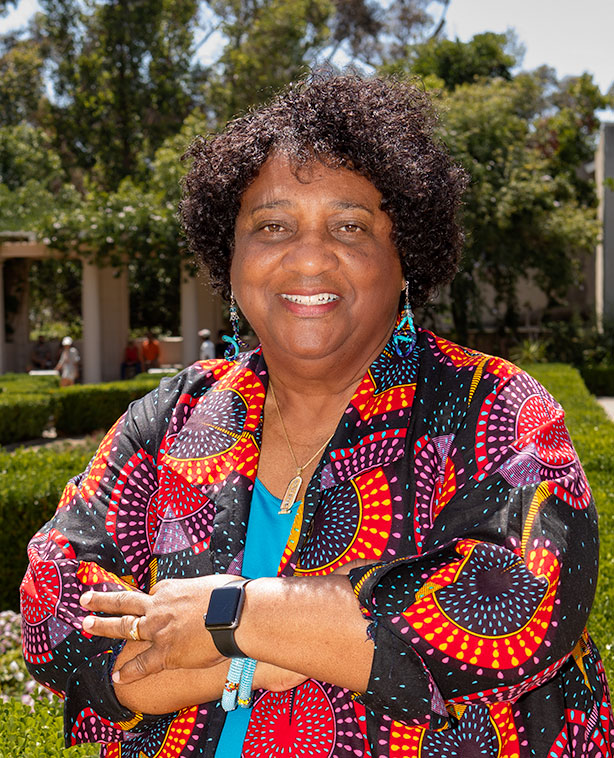
Shirley Nash Weber, Ph.D. (born September 20, 1948, Hope, Arkansas) is an American academic, civil rights advocate, and Democratic politician serving as California’s 30th Secretary of State — the first Black person ever to hold that office. Born to sharecroppers of Hope, Arkansas, Weber has lived in California since the age of 3. Her father left Arkansas after being threatened by a lynch mob and did not have the opportunity to vote until he was in his 30s. Weber has cited her family’s personal history of voting rights denial as the foundational motivation for her lifelong commitment to civic participation and election access.
Weber attended UCLA, where she received her B.A., M.A., and Ph.D. by the age of 26. Prior to receiving her doctorate, she became a professor at San Diego State University (SDSU) at the age of 23. A founding faculty member of San Diego State University’s Africana Studies program, Weber taught for nearly four decades before jumping into politics. She also taught at California State University, Los Angeles and Los Angeles City College. Before running for state office, she served as a member and chair of the San Diego Unified School District Board of Education for eight years.
Weber was elected to the California State Assembly in 2012, representing the 79th District (San Diego area), and served four terms. During her tenure in the Assembly, Weber chaired the Assembly Elections and Redistricting Committee, Assembly Budget Subcommittee on Public Safety, and Assembly Budget Subcommittee on Health. Weber was the first African American to serve as the chair of the Assembly Budget Committee. She authored AB 3121, which created California’s first-ever Reparations Task Force — the first such body created by any U.S. state. She also twice served as a California Presidential Elector, including chairing the California College of Presidential Electors on December 14, 2020. She was appointed Secretary of State by Governor Gavin Newsom in January 2021 and won a full four-year term in 2022 with 60.1% of the vote. She is now seeking a second full term.
Endorsements
California Democratic Party, California Federation of Teachers, SEIU California, Mayor of Oakland and former U.S. Rep. Barbara Lee, Sierra Club Angeles Chapter, Stonewall Democratic Club, and a broad coalition of Democratic officials and labor and civic organizations. A full list is available on her endorsements page.
Reputation/Scandals/Successes
Core Strengths and Positive Reputation
- Historic Figure and Lifelong Civil Rights Champion: Weber is California’s first Black Secretary of State and only the fifth African American to serve as a state constitutional officer in California’s 175-year history. Her family’s direct experience of Jim Crow disenfranchisement — a grandfather who was never able to vote, a father who could not vote until his 30s — gives her advocacy for voting rights a personal authority and moral weight that no other candidate in this race can match.
- Record of Expanding Voting Access: Under Weber’s leadership, California permanently implemented universal vote-by-mail for all registered voters — a landmark shift that dramatically increased participation, particularly among working-class voters, voters of color, disabled voters, and seniors. She has championed automatic voter registration, same-day registration, and aggressive outreach to newly enfranchised voters including the formerly incarcerated, who regained voting rights under legislation she helped advance.
- Defended California Voter Privacy Against Federal Overreach: Weber successfully resisted a Trump Department of Justice lawsuit seeking detailed California voter registration data, arguing that handing over sensitive voter information would threaten the privacy and safety of California’s voters. Civil liberties and voting rights advocates praised her for standing firm against what they characterized as a politically motivated federal demand designed to intimidate voters and suppress participation.
- Reparations Legacy: As a state Assemblymember, Weber authored AB 3121 — the law that created California’s first-ever Reparations Task Force, the first such body created by any U.S. state. The task force’s 2023 final report, spanning nearly 1,000 pages, has shaped a national conversation about addressing the economic legacy of slavery and is among the most significant legislative achievements of any California elected official in recent years.
- Deep Institutional Knowledge and Uncontested Democratic Support: Weber is the only Democrat in the race, has the full backing of the California Democratic Party and major labor and civic organizations, and is rated Safe Democratic by every major election analyst. Her decades of experience in the Assembly, on the school board, and in the Secretary of State’s office give her a depth of institutional knowledge that her Republican challenger cannot match.
Criticisms and Controversies
- California’s Notoriously Slow Ballot Counting: During her tenure, Weber has faced criticism for California’s slow ballot-counting process — so slow that projected winners of state legislative races are often sworn in before Weber’s office certifies the results. Weber has responded that accuracy must take precedence over speed, and that California’s large size and complex vote-by-mail system make rapid certification structurally difficult. Critics — including her Republican challenger and some nonpartisan election observers — argue that 30-day certification timelines undermine public confidence in elections and that California lags far behind other large states in tabulation speed.
- Antisemitic Statement in Official Voter Guide: Weber drew sharp criticism after the official 2026 state voter information guide — published under her office’s authority — included an antisemitic statement from a fringe gubernatorial candidate. Jewish community leaders and advocacy organizations condemned the publication and called on Weber to take responsibility. Weber’s office noted that state law significantly limits the Secretary of State’s legal authority to remove or edit candidate statements based on their content, even when deeply offensive. Some observers accepted this explanation; others argued Weber failed to exhaust available options or publicly condemn the statement forcefully enough.
- Criticism Over Voter Data Transparency: While Weber’s resistance to the Trump DOJ’s voter data request was widely praised by voting rights advocates, some critics — particularly on the right — characterized her posture as prioritizing secrecy over transparency, and argued that routine data requests about voter roll maintenance were being framed as threats to justify non-compliance. Weber maintains the data requests were politically motivated and posed genuine risks to voter privacy.
Campaign Contributors
Weber entered the 2026 race with a strong fundraising base built on her 2022 campaign infrastructure. Major contributors include labor unions, Democratic Party organizations, and individual donors. Full contributor details are available at Transparency USA.
Media Coverage
CalMatters Voter Guide – Secretary of State
CalMatters: California’s Race for Secretary of State Shows Partisan Divide Over How to Count Ballots
LAist: Secretary of State — Who’s Running and Why It Matters
inewsource: California Secretary of State Defends How Slowly Ballots Get Counted
KPBS: 2026 Primary Election — Secretary of State Race Explainer