
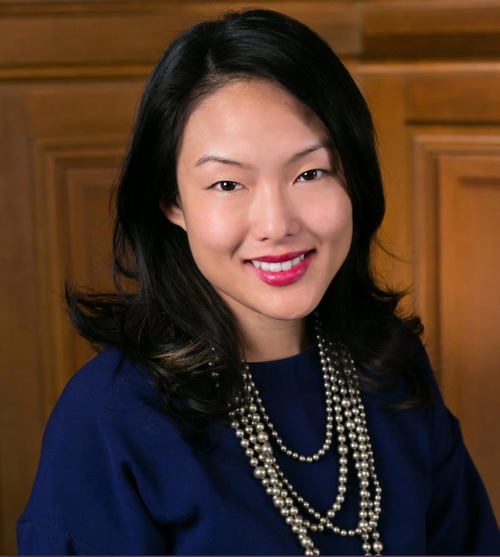
Jane Jungyon Kim (born July 9, 1977) is an American attorney and politician, and the first Korean American elected official in San Francisco. A member of the Democratic Party, she represented San Francisco’s District 6 on the Board of Supervisors from 2011 to 2019, championing tuition-free community college, a $15 minimum wage, and the largest childcare investment in U.S. city history. She previously served as president of the San Francisco Board of Education and was California political director for Bernie Sanders’ 2020 presidential campaign. She is currently executive director of the California Working Families Party and a candidate for California Insurance Commissioner in the June 2026 primary.
Kim was born in Manhattan to South Korean immigrant parents and grew up bilingual. She earned a B.A. in political science and Asian American studies from Stanford University and a J.D. from UC Berkeley School of Law, being admitted to the California State Bar in 2009. Before entering politics she worked as a youth community organizer at Chinatown Community Development Center in San Francisco for six years. She also earned a black belt in taekwondo.
In 2016, Kim ran for the 11th California State Senate District, finishing first in the primary but losing the runoff to Scott Wiener. In 2018, she ran for Mayor of San Francisco, finishing third with 24% of first-round votes. She declared her candidacy for Insurance Commissioner in January 2026, pledging not to accept contributions from insurance companies, fossil fuel companies, corporate PACs, or to self-fund her campaign.
Endorsements
U.S. Senator Bernie Sanders, Congressman Ro Khanna, Rep. Pramila Jayapal, Lt. Governor Eleni Kounalakis, SEIU California, California Teachers Association, UFCW Western States Council, and the Working Families Party. A full list is available on her endorsements page.
Reputation/Scandals/Successes
Core Strengths and Positive Reputation
- Bold Policy Vision: Kim is the most structurally ambitious candidate in the race, proposing a Disaster Insurance for All program — a publicly run risk pool modeled on systems in New Zealand and France — that would guarantee wildfire and flood coverage funded by a portion of policyholders’ premiums, while keeping private insurers for other risks. She also proposes a public option for auto insurance and mandatory insurer performance dashboards showing denial rates and claims data.
- Legislative Track Record in San Francisco: As a Board of Supervisors member, Kim passed San Francisco’s $15 minimum wage (then the nation’s strongest), made City College tuition-free for all residents, and secured more than $140 million annually for universal affordable childcare — demonstrating an ability to win major structural changes against institutional resistance.
- Clean Money Pledge: Kim has pledged to accept no contributions from the insurance industry, fossil fuel companies, or corporate PACs — and not to self-fund — positioning herself as the most financially independent candidate in the Democratic field, a contrast she draws explicitly against her opponents.
- Progressive & Labor Coalition: She has built a grassroots-oriented coalition backed by major unions (SEIU, CTA, UFCW) and nationally prominent progressives including Bernie Sanders and Pramila Jayapal, giving her strong small-donor fundraising infrastructure and organizing capacity.
Criticisms and Vulnerabilities
- No Insurance Industry Experience: Critics — including consumer advocacy groups — have raised concerns that Kim has no professional background in insurance, arguing she is not equipped to navigate the technical and regulatory complexities of overseeing the nation’s largest property and casualty market. Kim has countered that the role is fundamentally political, not actuarial.
- Ambitious Proposals Require Legislative Cooperation: Her signature Disaster Insurance for All program cannot be implemented by the Insurance Commissioner alone — it would require the governor and state legislature to act. Critics have questioned whether campaigning on proposals the office cannot unilaterally deliver overpromises to voters.
- History of High-Profile Electoral Losses: Kim lost the 2016 State Senate runoff to Scott Wiener despite leading in the primary, and finished third in the 2018 San Francisco mayoral race. Some observers question whether her progressive coalition can translate to a statewide electorate beyond her San Francisco base.
Campaign Contributors
Has raised approximately $521,000 across 400 contributions, third among candidates in the race as of the most recent Secretary of State filing. Major contributors include labor unions including SEIU California, the California Teachers Association, and the UFCW Western States Council. Kim has pledged to accept no money from the insurance industry, fossil fuel companies, or corporate PACs. Full contributor details are available at Transparency USA.